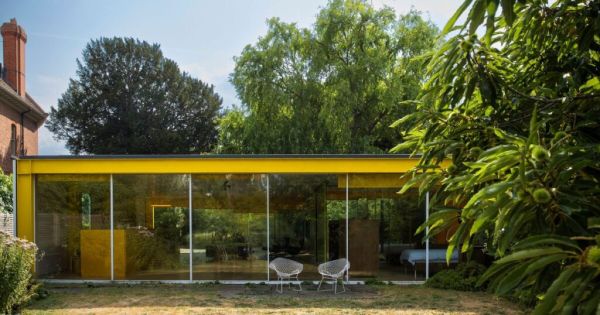
Modernist masterpiece that is 22 Parkside, pictured from the back garden (Image: National Trust / Megan Taylor.)
For an organisation whose portfolio includes a Roman villa stretching back nearly two millennia, the National Trust’s latest acquisition is a mere 58 years old. But 22 Parkside in Wimbledon, South-West London, is as influential as any of the conservation charity’s properties – having helped inspire the Centre Pompidou in Paris and the Lloyds of London buildings. The striking modernist home, a landmark of 20th century design created by the architects Richard and Su Rogers, has been given to the nation by their family.
It was designed in 1967 for Richard’s parents William and Ermengarde, known as Nino and Dada, and built between 1968 and 1970, making it the youngest property cared for by the Trust. The two single-storey building was a testbed for some of Richard Rogers’s seminal ideas that would later play out on the international stage in his world-renowned designs. The glass and yellow steel exterior exemplified functionalist design approach and was an early example of ‘High-Tech’ architecture. It aimed to show how homes could be built quickly and cost-effectively, using a pre-fabricated construction system.
The open-plan kitchen was inspired by Rogers’s upbringing in Italy – where food was a mainstay of family get-togethers – and designed for his mother, who loved cooking. The Italian-born British architect died aged 88 in 2021. His son Ben Rogers said: “22 Parkside is much more than a family home. It is one of the most important buildings my father and mother created – a place where many of the ideas that would go on to influence my father’s work and some of the world’s most celebrated architecture were first tested and explored.
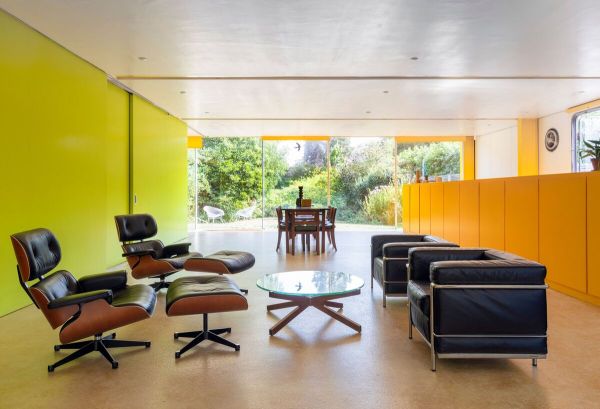
Inside the spacious open plan living area of 22 Parkside (Image: National Trust / Megan Taylor)
“As a family, we wanted to ensure that this remarkable house would be protected, cared for and shared with future generations, rather than remaining a private asset. The National Trust brings the expertise, public purpose and long-term commitment needed to safeguard its future, while opening up its story to students, researchers and visitors.”
Now the charity plans to work with the local community and with international partners to inspire the next generation of architects, designers and creatives. The three-bedroom, one-bathrom. single-storey house near Wimbledon Common – which last went on the market for £3.2million – is a Grade II listed building.
Having raised money from individual donors and charitable trusts including Bloomberg Philanthropies and the Sigrid Rausing Trust to guarantee 22 Parkside’s future, the National Trust is now inviting further support to bring the new vision to life and connect more people with modern heritage in London and beyond.
Ben added: “We are incredibly proud that 22 Parkside will become part of the nation’s heritage, but there is still more to do. Continued support will help ensure that its legacy of creativity, innovation and public benefit can inspire people for generations to come.”
Ruthie Rogers, the architect’s second wife, said: “Richard regarded public access to culture – whether architecture, art, theatre, music, or design – as one of the great aspirations in life. It filled him with such joy that the public would have access to this house that was once private, a house that was a prototype for what he thought houses could be for all.”
Hilary McGrady, Director-General of the National Trust, said: “We are profoundly grateful to the Rogers family for placing this extraordinary house in our care. Their generosity means that 22 Parkside will now become part of our shared inheritance, belonging not to a single family but to the people of England, Wales and Northern Ireland.
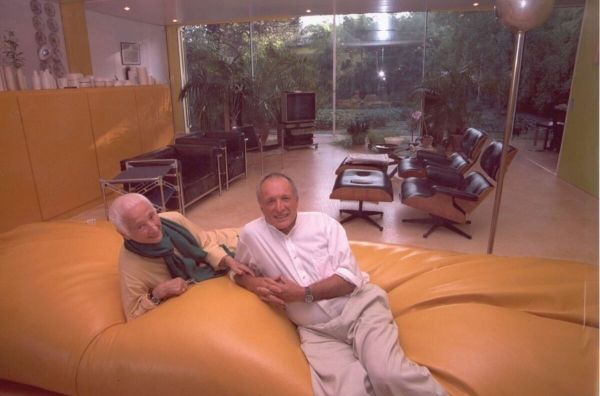
The late Richard Rogers, and his mother Dada at 22 Parkside (Image: National Trust / Ruthie Rogers)
“This extraordinary gift will ensure that a building where world-changing ideas were born continues to inspire new generations of thinkers, makers and creators.”
Lord Norman Foster, a pioneer of High-Tech architecture, said: “In many ways the building encapsulated the spirit of the 1960s. It was the essence of optimism. It is a tribute to the National Trust they have taken this initiative, this responsibility to preserve it for future generations, to visit, to enjoy.”
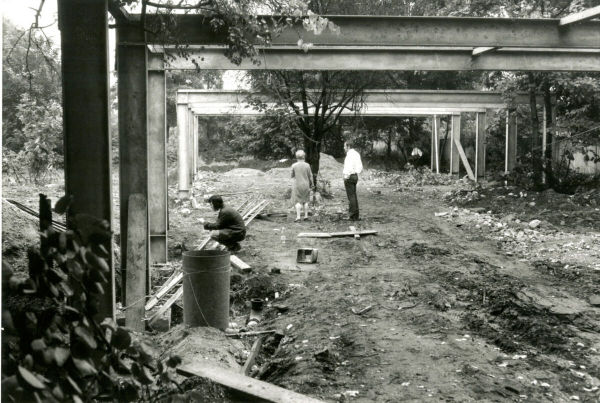
22 Parkside being built between 1968 and 1970 (Image: Courtesy RRCS)
Architect, broadcaster and National Trust Ambassador George Clarke added: “For me, this is one of the most significant acquisitions in the National Trust’s recent history. 22 Parkside not only followed in the footsteps of some of the most iconic modern homes on earth, such as Farnsworth House by Mies Van Der Rohe (1951) and the Glass House by Philip Johnson (1948-49), it sowed the seeds of some of the most incredible, functional, modernist architecture Richard Rogers was to produce until his passing in 2021. This is one of the most significant homes in British architectural history.”
Contact to : xlf550402@gmail.com
Copyright © boyuanhulian 2020 - 2023. All Right Reserved.