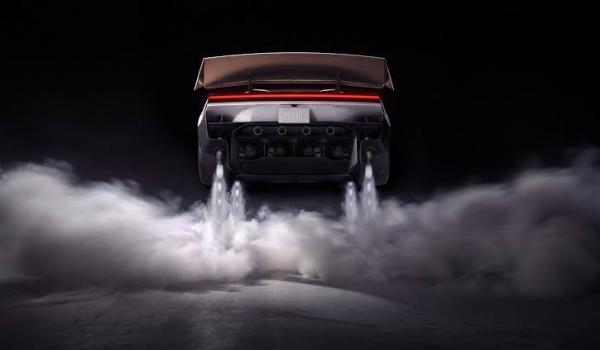
Tesla CEO Elon Musk has reignited excitement around the long-awaited next-generation Roadster after showcasing a futuristic sports car capable of performing an extraordinary mid-air manoeuvre. The demonstration, held at a SpaceX testing facility in McGregor, Texas, on October 15, 2026, has sparked renewed debate about how aerospace technology could transform electric vehicles.
“Turns out the future does have flying cars,” Musk wrote on X on October 16, sharing footage of the vehicle’s performance.
The demonstration, described as a “kickflip,” featured the Roadster launching off a ramp, flipping in mid-air and landing safely. The stunt quickly attracted attention online, with viewers comparing the vehicle’s capabilities to futuristic cars depicted in science-fiction films and video games.
However, the demonstration does not establish that the Roadster can fly independently or operate as a conventional flying car. Its eventual capabilities will depend on further development and testing.
Credits: Automotive News
Tesla Roadster Combines Electric Performance With Aerospace Technology
The latest Roadster concept brings together Tesla’s electric vehicle engineering and technologies associated with SpaceX, Musk’s aerospace company. The proposed combination aims to deliver extreme acceleration, improved traction and advanced vehicle control.
Tesla has claimed that the sports car can accelerate from zero to 60 miles per hour in approximately 0.81 seconds. If achieved under the specified testing conditions, that would represent extraordinary acceleration for a production-oriented vehicle. However, the claim will require independent verification, and the company has not established that every advertised capability will appear in the final production model.
The demonstration also highlighted the role of cold-gas thrusters, which use pressurised gas to generate thrust. Such systems are commonly associated with spacecraft manoeuvring, where small, rapid adjustments help control orientation and movement.
Their proposed application to a road-going sports car would represent an unconventional approach to vehicle dynamics. Tesla has not yet demonstrated that the technology is suitable for routine operation on public roads.
Tesla Targets 2028 Production for the Next-Generation Roadster
The Roadster has been one of Tesla’s most anticipated vehicles since Musk first unveiled the next-generation model in 2017. Its development has faced repeated delays, leaving prospective buyers waiting years for a production version.
Tesla is now targeting 2028 for production, although the timeline remains subject to change as engineering work continues.
The latest demonstration could help renew interest in the project, particularly among enthusiasts attracted to the combination of electric propulsion and aerospace-inspired features. Nevertheless, a public demonstration is not equivalent to a production-ready vehicle, and questions remain about pricing, final specifications, regulatory approval and customer deliveries.
The distinction between a technology showcase and a commercially available product will be particularly important if the Roadster incorporates complex systems that require extensive safety testing.
Active Aerodynamics and Suction Technology
Tesla has also outlined several unusual engineering features for the Roadster through its social media accounts.
“Roadster is a true pilot’s car: active aerodynamics, a multi-mode suction system & cold-gas thrusters,” the company wrote on Instagram.
The proposed suction system would use powered fans and a ground-sealing mechanism to draw air from beneath the vehicle. Tesla’s description suggests that the arrangement could generate substantial downforce, potentially allowing the vehicle to maintain traction even at very low speeds.
Active aerodynamic components, including adjustable wings, would further help manage airflow and stability. Conventional performance cars use aerodynamic downforce to improve grip, particularly during high-speed cornering. Generating meaningful downforce at zero speed, however, would require powered systems rather than airflow alone.
The company also describes cold-gas thrusters controlled by electric actuators, which are intended to make rapid adjustments to the vehicle’s orientation during flight. How these systems will work together, and whether they will be offered in a production vehicle, remains unclear.
Credits: Yahoo Finance
Futuristic Design and Lightweight Materials
The Roadster’s proposed exterior features concealed headlights, a full-length taillight and flush-mounted surfaces that give it a minimalist, aerospace-inspired appearance. Lightweight wheels with thin spokes are intended to balance structural strength with reduced mass.
Tesla has also described an anodised white finish designed around aerospace requirements, including resistance to ultraviolet exposure, corrosion and other demanding conditions. Gold-tinted glazing, inspired by the copper-coloured coatings used on spacesuit visors, is paired with titanium accents.
Inside, the concept features an ultrawhite cabin with grey microsuede detailing and supportive seat bolsters. Manual controls, a fixed seat position and materials such as magnesium, titanium and carbon fibre are intended to reduce weight while maintaining strength.
Despite the ambitious specifications, the final design may change before production.
Contact to : xlf550402@gmail.com
Copyright © boyuanhulian 2020 - 2023. All Right Reserved.