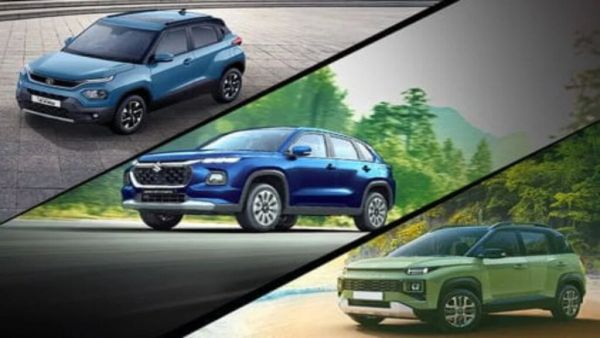
Automobile Desk: The thinking and preferences of customers are changing rapidly in the four-wheeler market of the country. Now Indian car buyers are not limited to just basic or low-budget vehicles, but are not shying away from spending more budget for better features, modern technology and strong safety. According to Deloitte India's latest auto report 'Wheelwatch', the strongest jump has been recorded in the sales of cars in the price range of Rs 12 lakh to Rs 20 lakh in the second quarter of FY 2027.
If we look at the data of the report, a huge increase of 33.6 percent has been seen in the sales of cars in the Rs 12 to 20 lakh segment on an annual basis. The total market share of this segment has also increased by 1.2 percent. In sharp contrast, demand for vehicles in the Rs 7 lakh to Rs 12 lakh range witnessed a marginal decline of 0.4 per cent, although this bracket still accounts for almost half of total sales. Following the policy priorities to GST 2.0, wholesale sales of passenger vehicles increased by 30.7 percent to cross 14 lakh units, which is more than the 25.9 percent growth in the first quarter.
The attitude of Indian customers is also changing in the matter of fuel. Now people are giving preference to green fuel and cost-saving options instead of traditional petrol cars. During the second quarter, the market share of petrol cars declined by 2.8 percent to 42.6 percent. At the same time, there was a jump of about 50 percent in the registration of CNG vehicles and this figure reached 2.33 lakh units. In states like Gujarat, Maharashtra, Haryana and Rajasthan, the sales of CNG models have even overtaken petrol vehicles. The main reasons for this are believed to be low running costs and customer caution regarding E20 fuel.
The electric vehicle (EV) segment has also seen record growth. EV registrations almost doubled to 97,000 units, increasing the EV market share to 6.7 percent from 6 percent in the first quarter. Apart from this, the dominance of compact models has increased in the SUV segment and their share has improved by 3.3 percent. People are now getting the experience of premium vehicles only in small SUVs, due to which the share of mid-size SUVs has decreased by 1.9 percent. Many buyers are also turning to second-hand premium brands instead of new mid-size SUVs.
On the other hand, the growing gap between wholesale supply of vehicles and actual retail delivery seems to be a challenge for showroom dealers. While retail sales recorded a growth of 22.2 percent, the inventory stock of vehicles sent by companies to dealers is continuously increasing. At the end of July, about 33 to 35 days of stock was available with the dealers, which has increased to 43 to 45 days by the end of September. This increasing level of stock is going to be very important from the point of view of dealership management in the future.